Designing Custom Furniture With a 3D Designer: From Sketch to Fabricator
The moment a room needs a piece that does not exist, an interior design project changes character. The banquette has to fit a bay that is not square. The client wants a dining table at a length no manufacturer sells. The vanity must clear a plumbing rough-in that is fixed. Suddenly the designer is not specifying furniture. They are designing it.
This is where a great many good interior projects lose time and money — not in the design, which is usually sound, but in the distance between a designer's sketch and a fabricator's shop floor. A 3D designer's job is to close that distance.
The Gap Between Sketch and Shop
A fabricator quoting from a beautiful hand sketch is doing two things at once: building your piece and inventing the parts you did not draw. Joint type. Panel thickness. Whether the drawer runs on a side mount or an undermount. How the top attaches to the base when the wood moves in winter.
Every one of those inventions is a decision made by someone who has never met your client. Sometimes it is the right decision. Often it is the easiest one, priced defensively — because a fabricator who cannot see the piece clearly builds contingency into the number.
Two costs follow. The quote is higher than it needed to be, and the piece that arrives is not quite the piece you drew.
What Changes With a 3D Designer in the Room
Working with a 3D designer means the piece is fully resolved before anyone prices it. Not styled — resolved. Every dimension exists. Every joint is decided. Every material has a thickness and a grain direction.
That resolution happens collaboratively and quickly. A designer sends a sketch, a SketchUp model, a reference photo, sometimes a description over the phone. The 3D designer builds it, and the two of them iterate — the apron drops half an inch, the leg taper softens, the reveal at the base grows because the floor is uneven. These are five-minute changes in a model. They are catastrophic changes in a shop.
The work reveals problems on a schedule you control. A drawer that cannot open because it collides with the leg is a discovery you want on a Tuesday afternoon, not on delivery day.
The Rendering and the Drawing Come From the Same Model
Here is the practical benefit that designers tend to underestimate. Once the piece is modeled properly, two very different deliverables fall out of the same geometry.
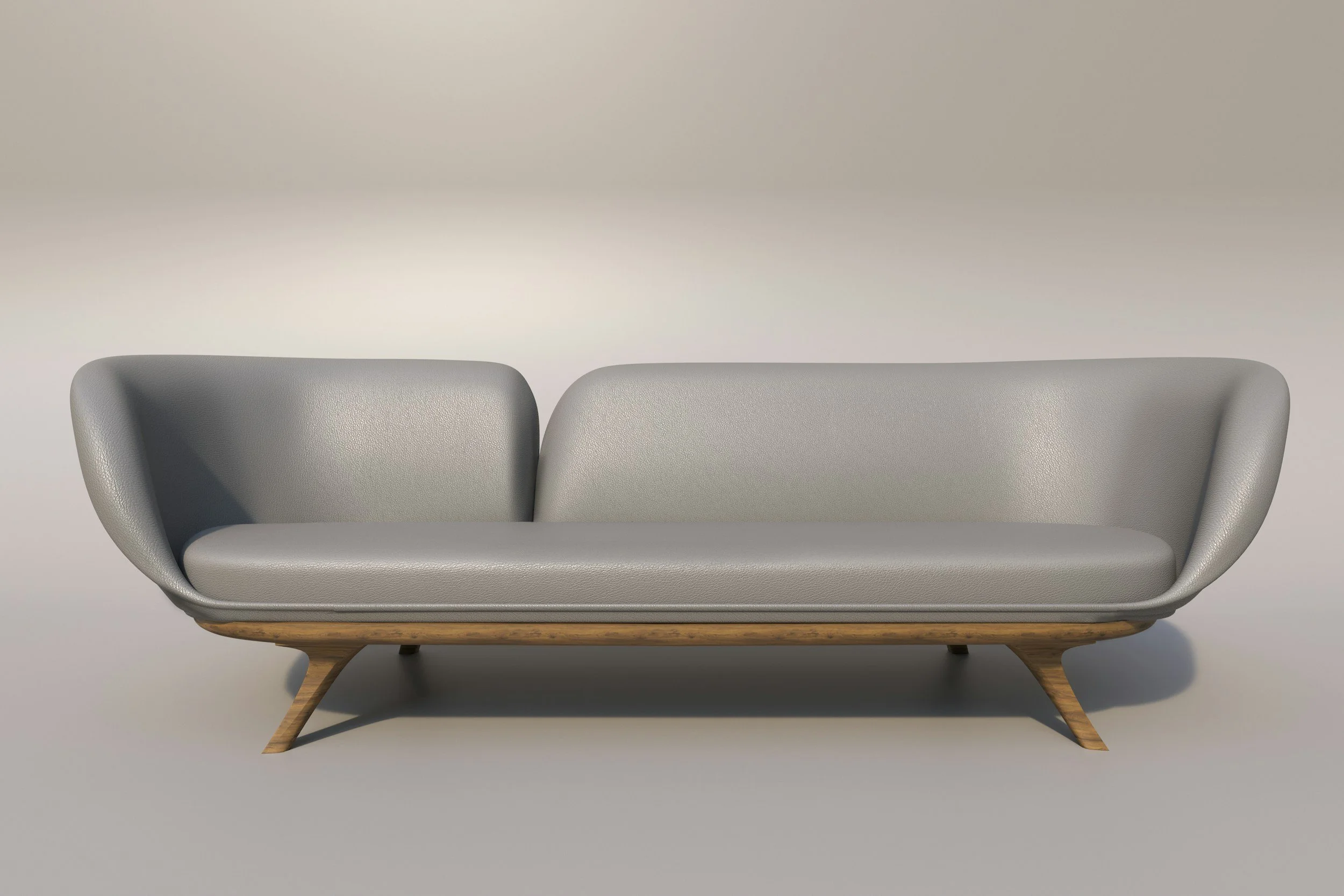
The photorealistic rendering goes to the client. It shows the actual walnut with the actual grain, the actual brass at the actual patina, sitting in the actual room under the actual lighting on your reflected ceiling plan. Clients approve custom furniture far more readily when they can see it rather than imagine it, and a rendering costs a fraction of a prototype.
The shop drawings go to the fabricator. Dimensioned orthographic views, sections through the joinery, exploded assemblies, a hardware schedule, finish callouts. Delivered as DWG and PDF, and where a shop is running CNC, as the solid geometry their CAM software expects.
Because both come from one model, they cannot disagree. The client approves the thing the fabricator builds. That sounds obvious. It is remarkably often not the case.
Why Fabricators Bid Lower on Good Drawings
Ask any millwork shop what they would rather receive and the answer is unambiguous: a complete drawing set. Not because they enjoy paperwork, but because ambiguity is expensive to them.
A shop that can see the joint, the thickness, and the hardware knows its material take-off, its machine time, and its risk. It bids the work rather than the uncertainty. It asks fewer questions, which means fewer emails you have to answer between meetings. And when it builds the piece, the piece matches — because the drawing left nothing to interpretation.
We should be honest that this is not universal, and a shop's own capabilities and standards vary. But the direction of the effect is consistent, and any fabricator will confirm it.
Working With Lunix3D
Most of our interior work now runs this way. A designer brings us a piece — a built-in, a table, a bed frame, a reception desk — and we develop it with them until the model is right, render it for the client, and draw it for the shop. The design is entirely theirs. We are the part between the sketch and the sawdust, and we do not appear in front of your client.
If you have a custom piece that a fabricator has been asking questions about, we would like to see it. Reach us through Lunix3D.com.